
Two identical bikes bought on the same day can end up worlds apart a few years later — one still pulls cleanly and shifts sweetly, the other feels tired and noisy. More often than not, the difference isn’t the rider or luck; it’s the oil that went in, change after change. Here is what actually matters, and how Elzer Motor Oil 4T is built to meet it.
1. The wet clutch changes everything.
A 4-stroke motorcycle runs a clutch that sits in the same oil as the engine. That single fact means the oil must do two jobs at once: lubricate the engine and preserve the friction the clutch needs to grip. This is why a proper bike oil carries a JASO MA/MA2 rating. A “friction-reducing” oil designed for scooters can make the clutch slip, blunt acceleration and, over time, wear the clutch plates. That is why the JASO class is the very first thing to check — before viscosity, before brand, before price.
2. Grade and approvals you can actually verify.
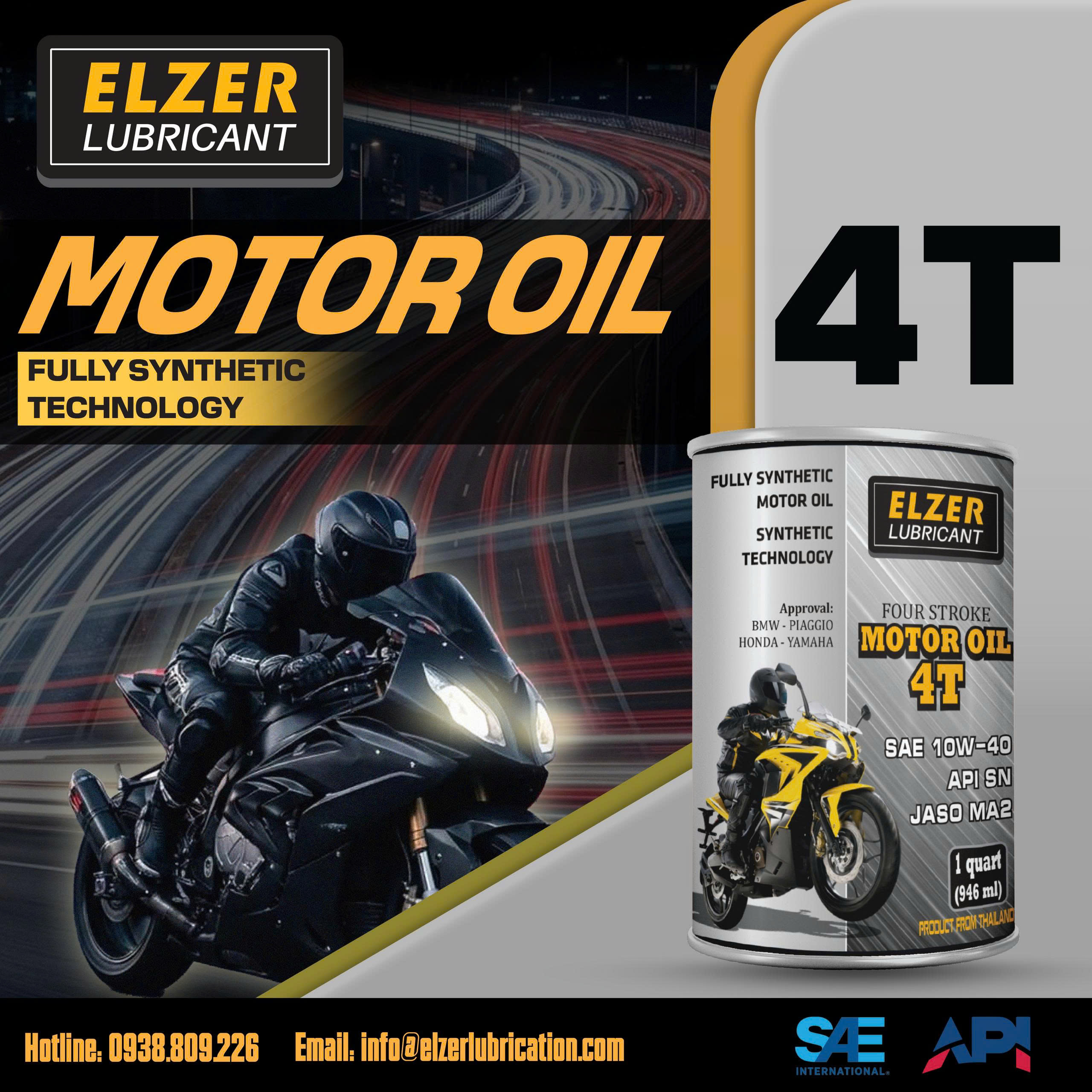
Elzer Motor Oil 4T is rated SAE 10W-40, API SN, JASO MA2, and is approved for use with BMW, Piaggio, Honda and Yamaha. These are objective markings, not marketing adjectives: SAE tells you the viscosity, API the quality tier, JASO the motorcycle-specific suitability, and the manufacturer approvals confirm real-world validation. Reading them is how you know an oil belongs in your engine, rather than trusting the words on the front of the bottle.
3. What the oil is doing between services.
A good 4T oil forms a thin, resilient film that reduces friction and wear, stays stable at high speed and temperature, resists oxidation, controls deposits to keep the engine clean, and supports smooth, consistent power delivery. Elzer Motor Oil 4T is formulated to hold these properties across the whole service interval rather than fading quickly after a few hundred kilometers — which is what keeps the bike feeling consistent day to day.
4. Reading the warning signs.
When the oil degrades or is overdue, the bike tells you: more engine heat, more noise, heavier gear changes, weaker acceleration and rising fuel consumption. Hard starting and a rougher idle are common too. Treat these as prompts to change rather than problems to live with — ignoring them simply shifts a small maintenance cost into a large repair bill later on.
5. A simple, reliable habit.
Change every 1,500–2,000 km, or sooner under heavy city use, and pair the change with the correct fill level. Avoid mixing different oils, and don’t stretch the interval to save money — the saving is an illusion. The right grade, changed on time, is the cheapest insurance a bike engine can have — and delivering exactly that, reliably, is the job Elzer Motor Oil 4T is designed to do.